PAGA / Siren Coverage Study
A PAGA / Siren Coverage Study ensures effective emergency alarm audibility across industrial facilities by analyzing sound coverage, optimizing speaker placement, and ensuring compliance with international safety standards.
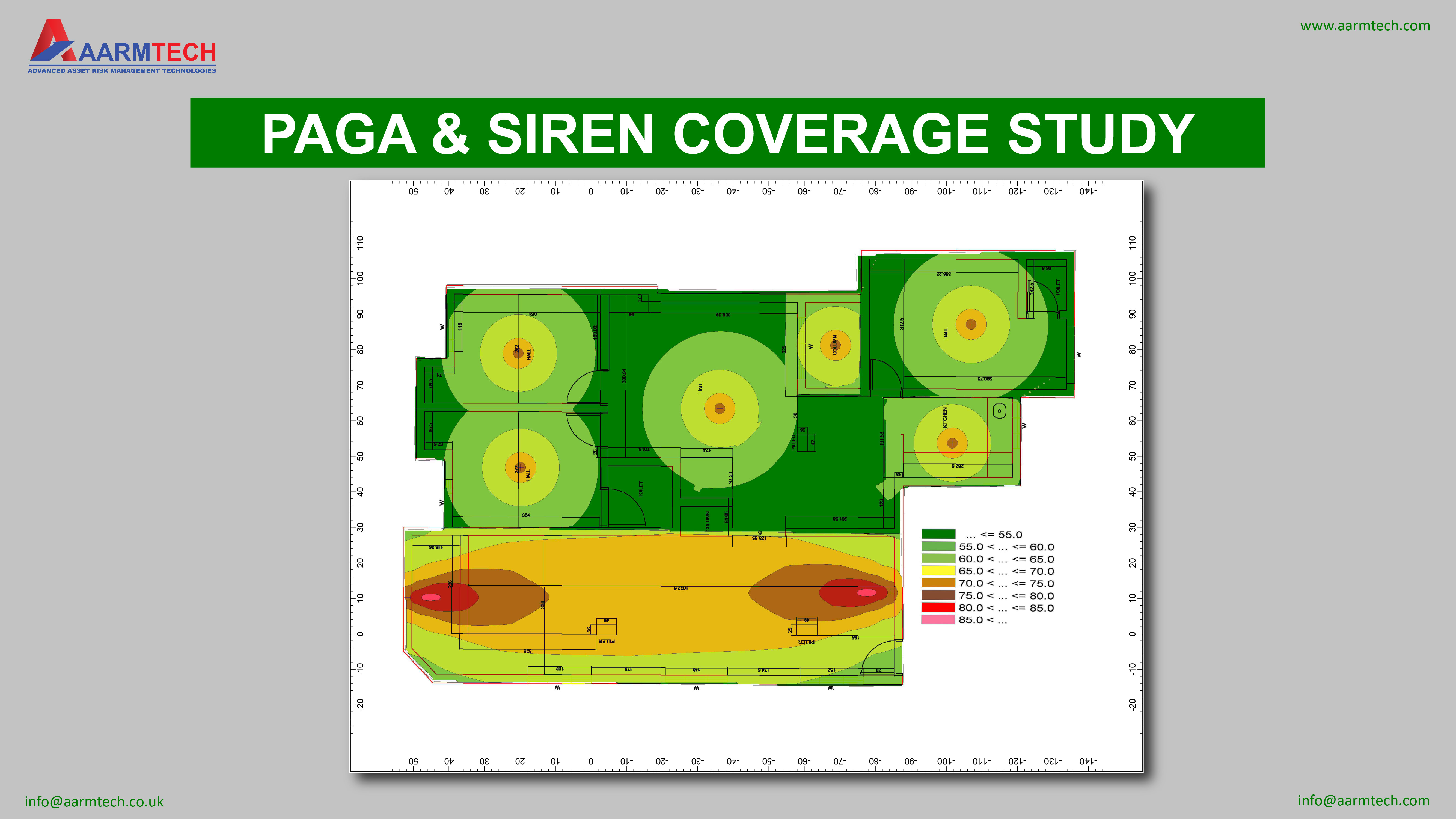
PAGA / Siren Coverage Study
Ensuring Reliable Emergency Alert Coverage in Industrial Facilities
A PAGA (Public Address and General Alarm) / Siren Coverage Study is a critical engineering analysis used to ensure effective and reliable emergency communication across industrial facilities such as Oil & Gas plants, refineries, petrochemical units, offshore platforms, and large infrastructure projects.
In high-risk environments, emergency communication systems play a vital role in safeguarding personnel and assets. The effectiveness of these systems depends not only on equipment selection but also on proper acoustic design and coverage validation across the entire facility.
The main objective of a PAGA / Siren Coverage Study is to ensure that alarm signals, sirens, and voice announcements are clearly audible in all operational, occupied, and hazardous areas. The study identifies any under-covered zones or “dead zones” where sound levels may fall below required thresholds, especially in areas with high ambient noise from machinery, turbines, compressors, or process operations.
At AARMTech Engineering, we perform detailed and structured coverage studies using engineering-grade inputs such as facility layout drawings, acoustic environment conditions, background noise levels, and PAGA system specifications. Using this data, we analyze sound propagation and optimize the placement of speakers and sirens to ensure uniform sound distribution throughout the facility.
Our approach ensures that sound pressure levels (SPL) meet project-specific requirements as well as international safety standards. This helps in achieving a balanced system design that avoids both under-coverage and over-design, resulting in improved system efficiency and cost optimization.
A properly executed PAGA / Siren Coverage Study significantly enhances emergency preparedness by ensuring that all personnel receive clear, timely, and intelligible alerts during critical situations. This supports faster evacuation, improved response coordination, and reduced risk to life and assets.
Key Benefits
- Ensures complete and uniform emergency sound coverage across all facility zones
- Enhances overall safety and improves emergency response effectiveness
- Optimizes placement of PAGA speakers and sirens for better performance
- Supports compliance with IEC, NFPA, and project-specific standards
- Identifies and eliminates acoustic “dead zones” in complex environments
- Reduces design errors, rework, and long-term operational risks